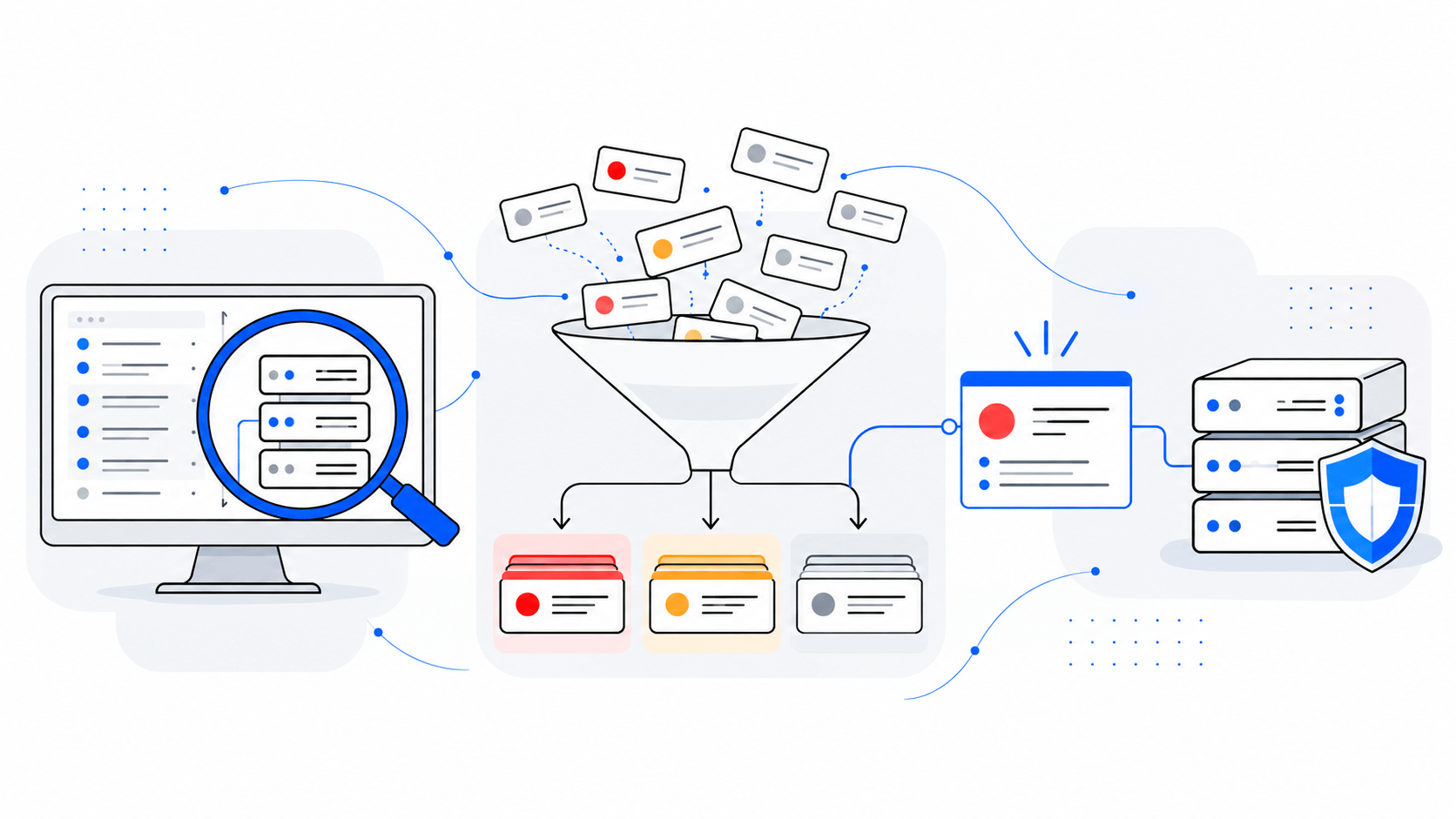
From Vulnerability Scanning to Remediation: How to Decide What to Fix First
Decide what to fix first after a vulnerability scan. Prioritise findings by asset criticality, exposure and business risk, then verify remediation.
Our products
The compliance platform built by our cybersecurity practice. Its built-in AI automates the gap analysis for NIS2 and the Czech Cybersecurity Act.
Cybersecurity
The new Cybersecurity Act places responsibility for NIS2 compliance directly on company leadership. Learn what management must ensure, what penalties may apply, and which options are available – from internal solutions to CISO outsourcing and tools like AuditMaster.ai.

Cybersecurity is no longer just an IT issue. The new Cybersecurity Act places responsibility directly on company leadership. If you have been counting on your IT department to handle the new obligations, it is time to reconsider, because that approach is no longer enough.
The Cybersecurity Act (ZoKB) sets out specific obligations for companies providing so-called regulated services. What matters for management, however, is that this responsibility is not limited to specific technical measures. The law requires a comprehensive approach to organisational and procedural changes across the entire company, and the statutory body is responsible for ensuring this happens.
This responsibility also has a criminal dimension. According to Section 8, Paragraph 1 of Act No. 418/2011 Coll., on the Criminal Liability of Legal Entities, a company may be prosecuted if its leadership fails to take sufficient action to meet its legal obligations.
In addition, the amendment to the Criminal Code (Act No. 270/2025 Coll.) allows for personal liability of management members who, through negligence or inaction, enable their organisation to breach regulations designed to protect information and operational security.
Ignoring the new legislation or treating it as merely an IT department issue rather than a company-wide responsibility can now expose leadership to serious legal and financial risks.
From a legal standpoint, the statutory body of a company is obliged to:
The way an organisation approaches these requirements depends on its size, internal structure, and available resources. In most cases, it will involve a combination of the following four approaches.
Larger organisations typically choose to employ an internal Chief Information Security Officer (CISO). This person has an overview of the company’s infrastructure, sets up security processes, ensures the implementation of protective measures, and manages communication with the National Cyber and Information Security Agency (NÚKIB).
The main advantage of this approach is direct control and continuous oversight. However, it also comes with high costs and a shortage of qualified professionals. According to experts, hundreds of cybersecurity specialists are currently missing in the Czech Republic.
Smaller companies often rely on current employees who already understand the organisation’s operations and internal processes. The role of a security manager can temporarily be assigned to an IT manager, compliance officer, or operations lead. The key, however, is to ensure that these employees receive adequate training and methodological guidance.
Whirr Crew offers training programmes for company leadership and responsible personnel, focusing on the obligations under the Cybersecurity Act (ZoKB), principles of risk management, and proper preparation of documentation and audit evidence.
When assigning cybersecurity responsibilities to existing employees, it is important to carefully assess their capacity to ensure that cybersecurity management does not come at the expense of their core business duties.
An external cybersecurity manager (CISO) is an ideal solution for organisations that do not have their own in-house specialist. This approach typically involves either long-term cooperation or a several-month engagement aimed at establishing new processes, control mechanisms, and reporting structures. It can also include training and mentoring of an internal team that will later take over the management of cybersecurity independently.
Outsourcing allows companies to meet regulatory requirements without building a dedicated in-house department. We provide this role as CISO as a service.
For larger organisations, collaboration with international consulting companies is often the preferred solution, as these firms can cover not only the technical but also the legal, procedural, and audit aspects of compliance.
The main advantage of this approach is a comprehensive and structured implementation that aligns legal, organisational, and technical requirements. However, the downside is a higher cost and slower execution, which can delay the company’s readiness for NIS2 compliance. Such projects typically make sense for enterprises with multiple branches, complex infrastructures, or those that already operate under standards and regulations such as ISO 27001 or DORA.
Although the NIS2 requirements may appear primarily technical, their successful implementation depends on organisation and governance. Management must ensure that cybersecurity becomes an integral part of the company’s long-term strategy, on the same level as finance or compliance.
If your implementation process lacks structure and you want to manage cybersecurity more efficiently, try AuditMaster.ai – an intelligent platform designed to simplify NIS2 compliance and documentation management. A free trial is available.
Company leadership holds the ultimate responsibility for ensuring that the organisation meets all legal obligations related to cybersecurity. Neglecting these steps can lead to both legal and financial consequences, including the personal liability of management members.
Decide what to fix first after a vulnerability scan. Prioritise findings by asset criticality, exposure and business risk, then verify remediation.
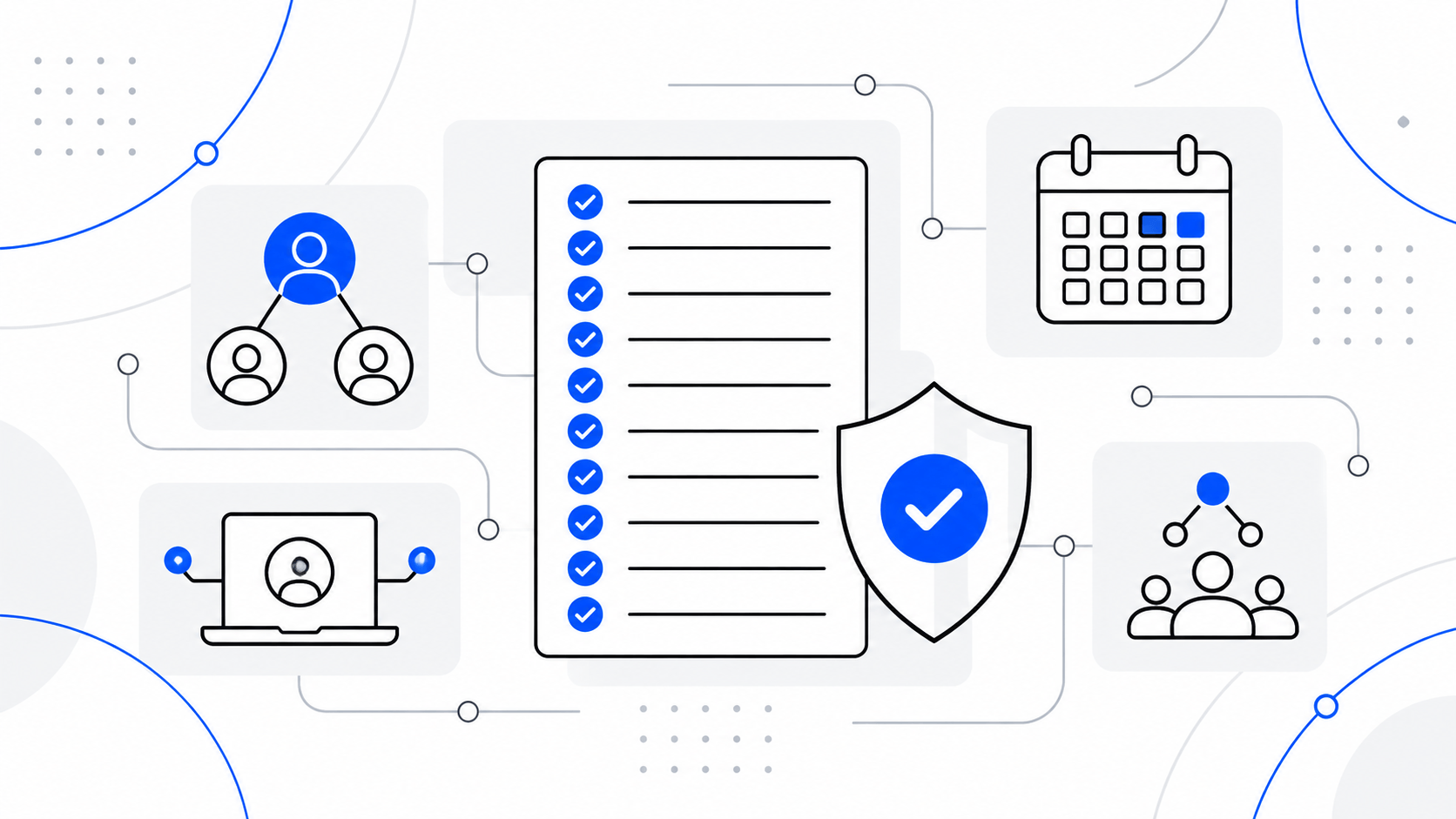
What should you prepare in the first year after registering a regulated service? A ZoKB checklist covering risks, security measures, incidents and recovery.
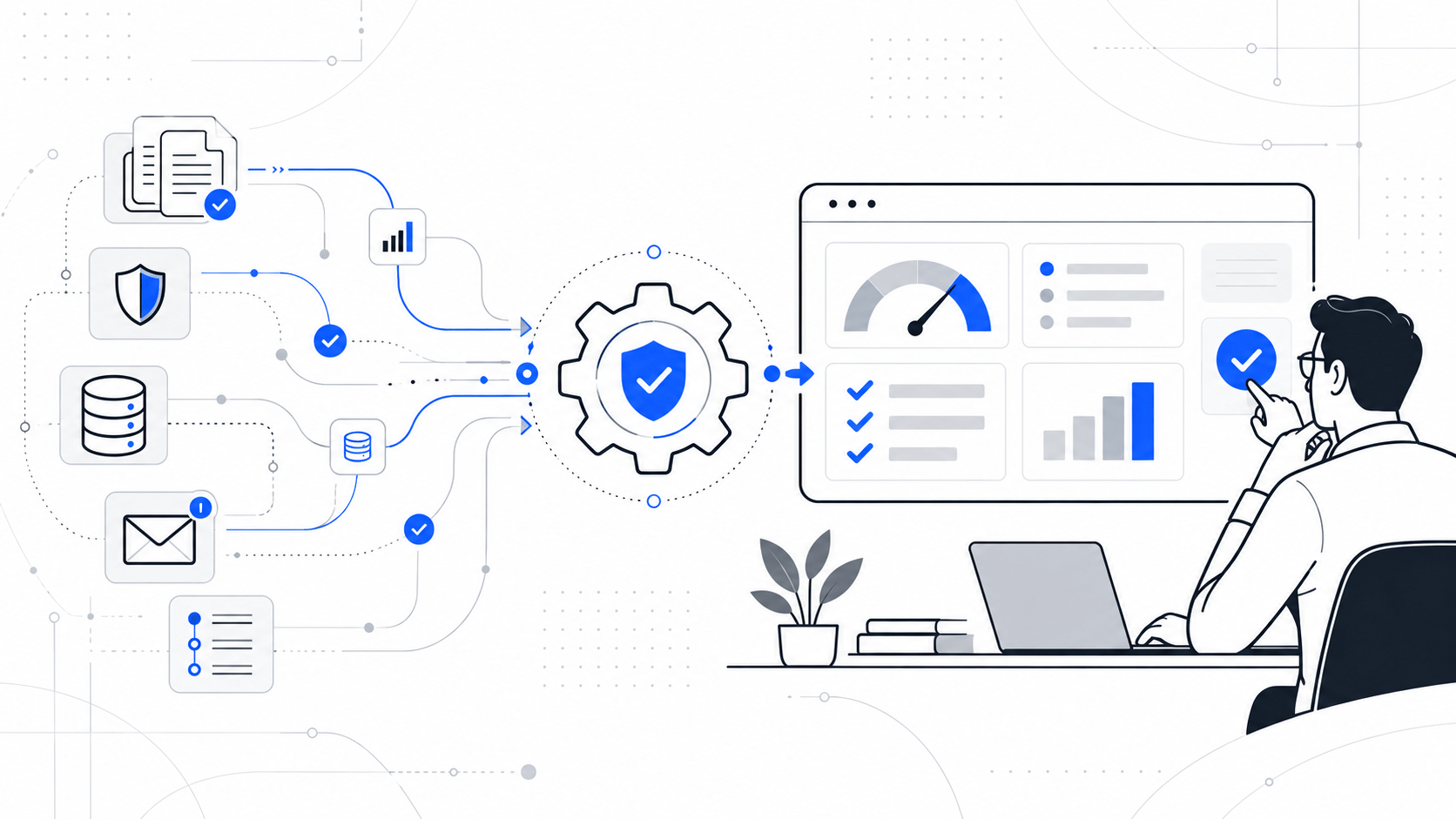
Learn which GRC activities can be automated, where AI adds value, and why evidence, control and risk decisions still require expert human judgement.
Tell us what you need to secure, automate, build or staff. A senior consultant will get back to you.
 Aleš PoláčekCEO, Whirr Crew
Whirr Crew s.r.o., Rybná 716/24, 110 00 Praha 1