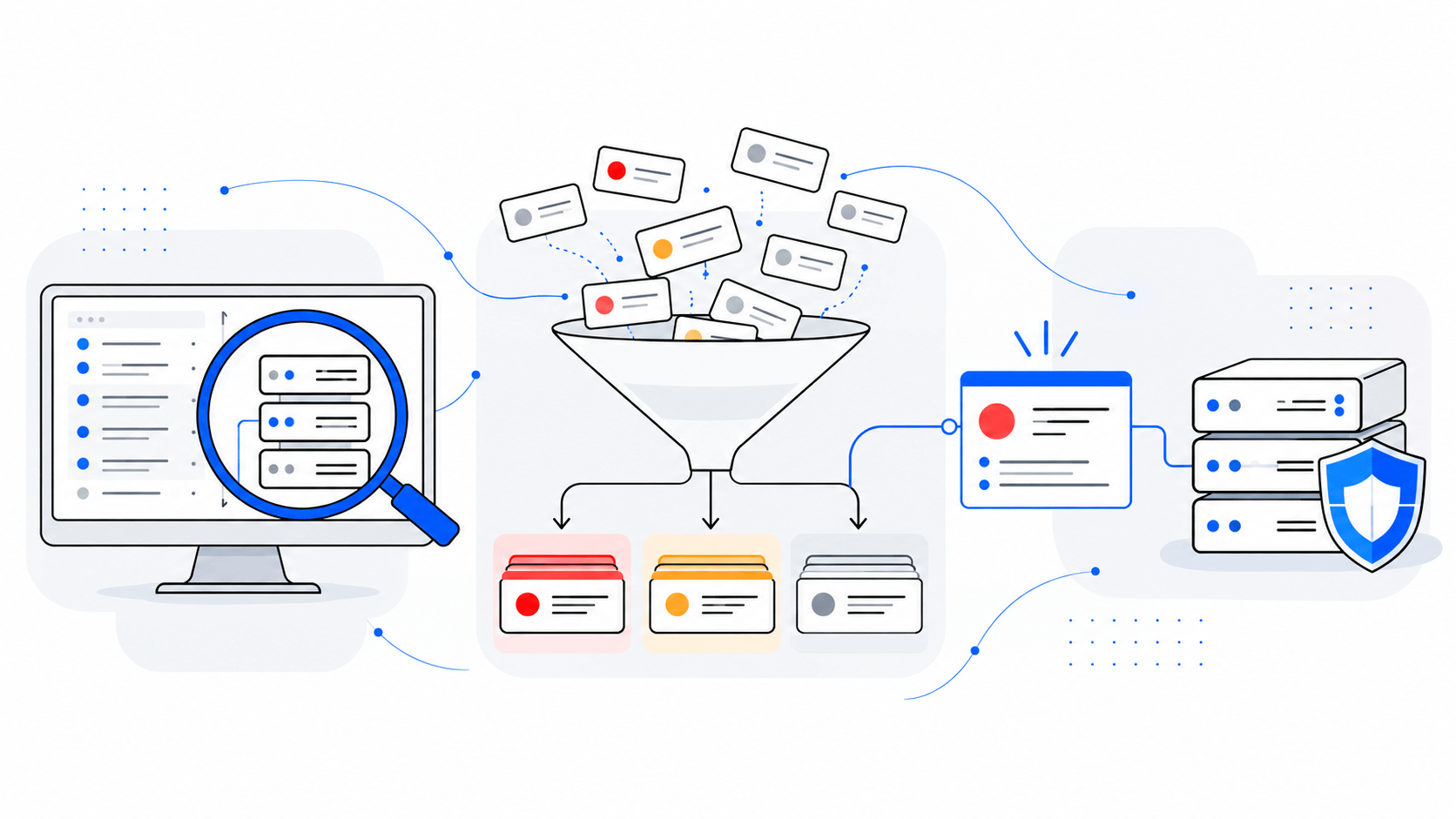
From Vulnerability Scanning to Remediation: How to Decide What to Fix First
Decide what to fix first after a vulnerability scan. Prioritise findings by asset criticality, exposure and business risk, then verify remediation.
Our products
The compliance platform built by our cybersecurity practice. Its built-in AI automates the gap analysis for NIS2 and the Czech Cybersecurity Act.
Cybersecurity
Learn which GRC activities can be automated, where AI adds value, and why evidence, control and risk decisions still require expert human judgement.
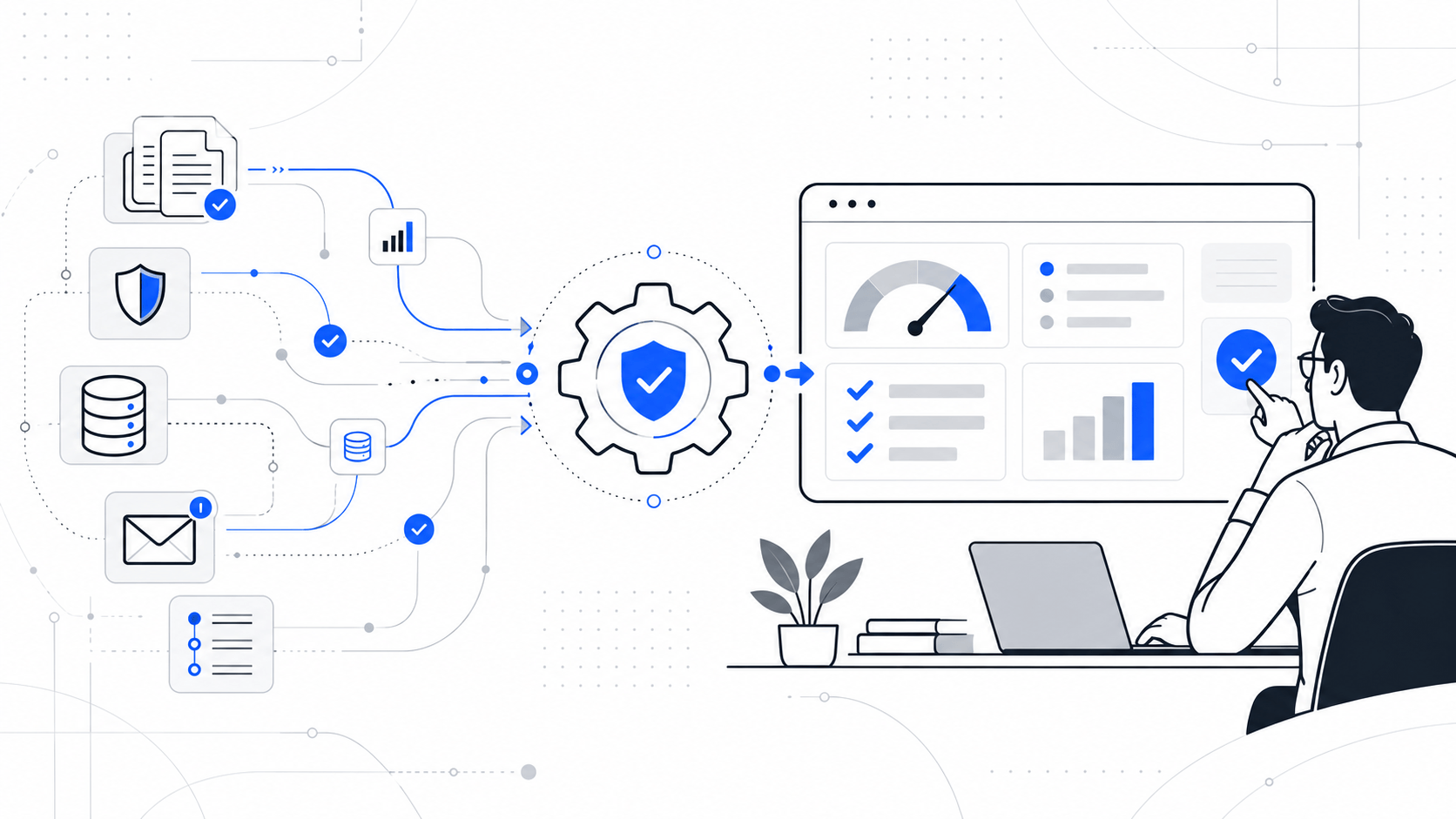
Organisations subject to the requirements of NIS2, ISO/IEC 27001, DORA or other regulatory frameworks manage large volumes of evidence, controls, risks and related documentation. This is precisely where GRC software can significantly reduce the administrative burden and improve the efficiency of compliance management.
Automation, however, does not mean that software can independently determine whether an organisation complies with the requirements, whether a control is adequate or whether a specific risk is acceptable.
The practical rule is simple: automate the collection, recording, processing and management of information. Leave expert human judgement, accountability and risk decisions to people.
A well-designed GRC system therefore does not replace people. It eliminates routine tasks, improves traceability and provides better decision support.
The greatest potential for automation lies in the information collection and record-keeping stage.
Organisations typically work with large volumes of documents, records, reports, control results, technical configurations, audit findings and other evidence. Managing this information manually in spreadsheets and shared folders is time-consuming and also increases the risk of errors.
GRC software can automatically:
A connected data model also delivers significant value. A single asset, risk, security control or item of evidence can be used across multiple regulatory frameworks. This eliminates the need to manage the same information repeatedly in several separate registers.
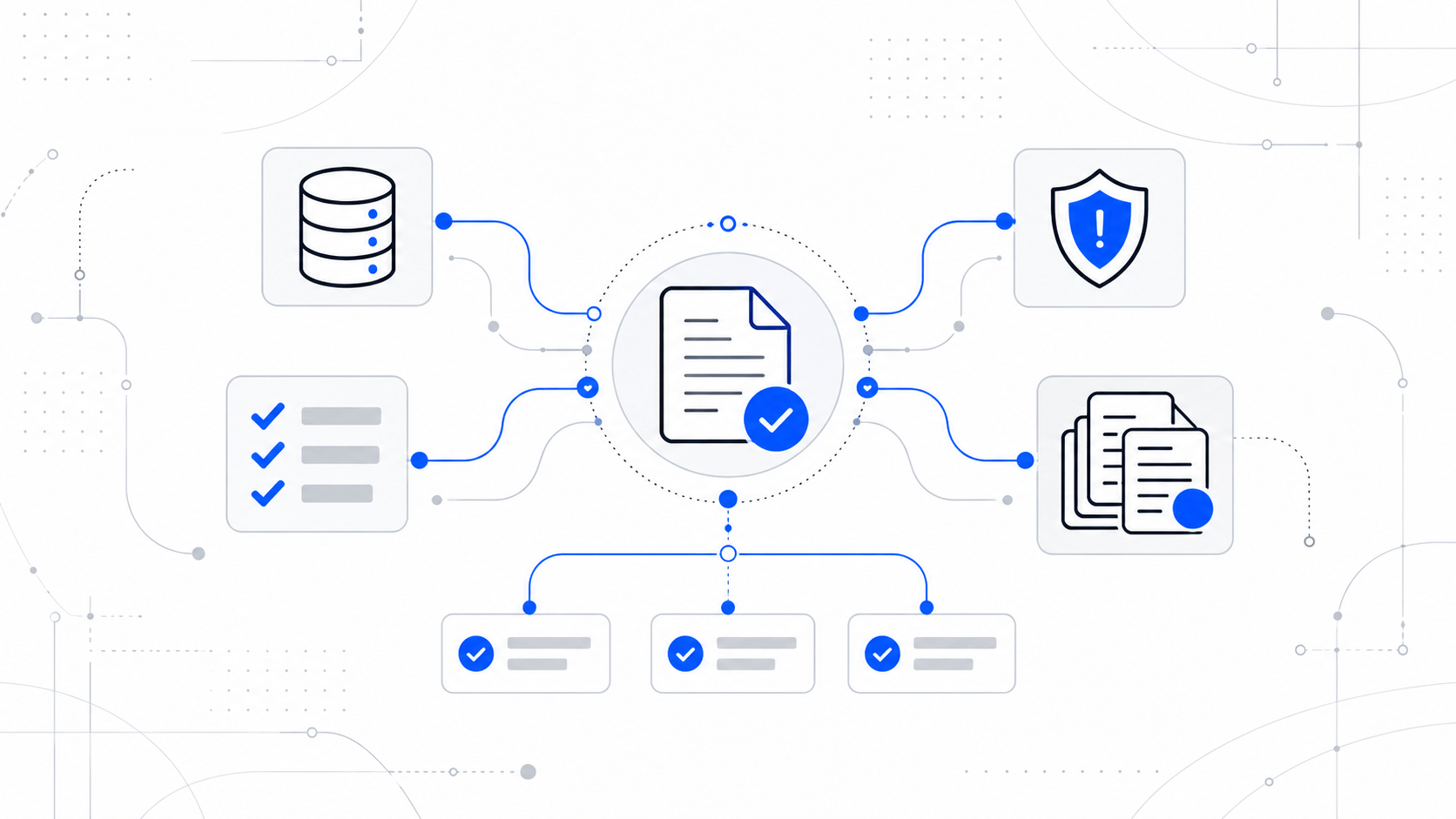
The collection of technical data from trusted sources can be automated in a similar way. If the status of a control can be measured objectively, the system can regularly verify, for example, a configuration, the status of a security tool or another technical parameter.
This part of the lifecycle is particularly well suited to a high degree of automation. Most activities are repeatable, clearly defined and easy to verify.
Once evidence has been collected, a significantly more complex stage begins.
The mere existence of evidence does not mean that a requirement has been met or that a control is effective. Someone must assess the quality of the evidence, its relevance, whether it is up to date and how it relates to the specific requirement.
This is where the final decision must remain with a person.
Software can record evidence. It can flag that the evidence has been uploaded. It can even verify that the evidence has the correct format or required attributes. However, it cannot reliably assume responsibility for deciding whether the evidence actually demonstrates that the requirement has been met.
This applies in particular to:
AI can help a great deal with these assessments.
AI can analyse the content of documentation, compare requirements with available evidence, identify potential gaps, suggest links between requirements and controls, or flag inconsistencies in the documentation. It can also prepare a preliminary assessment or recommendation for a specialist.
However, AI output should be treated as decision support, not as the decision itself.
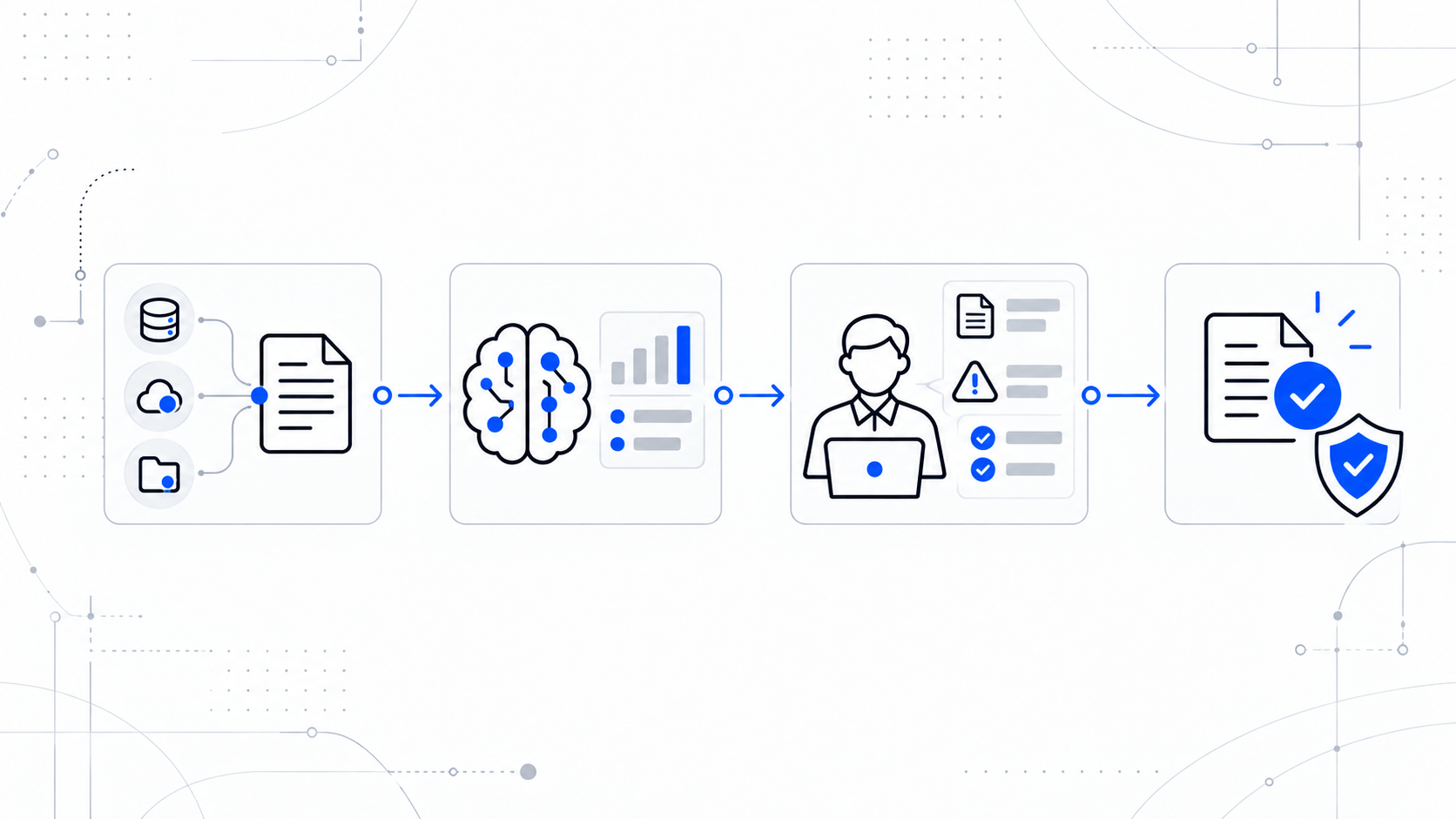
Professional GRC processes should retain a human-in-the-loop approach. The accountable individual must understand the inputs used, verify the accuracy of the recommendation and take responsibility for the final conclusion.
The greater the impact of a decision on the organisation's risk profile, the more important expert human judgement becomes.
No evidence remains current forever.
Documentation changes, processes evolve, systems are replaced with new solutions and organisations implement additional controls. Evidence that was entirely relevant a year ago may no longer reflect the actual situation today.
Every compliance management system must therefore include a mechanism for periodic review.
Automation can also provide significant support here.
GRC software can:
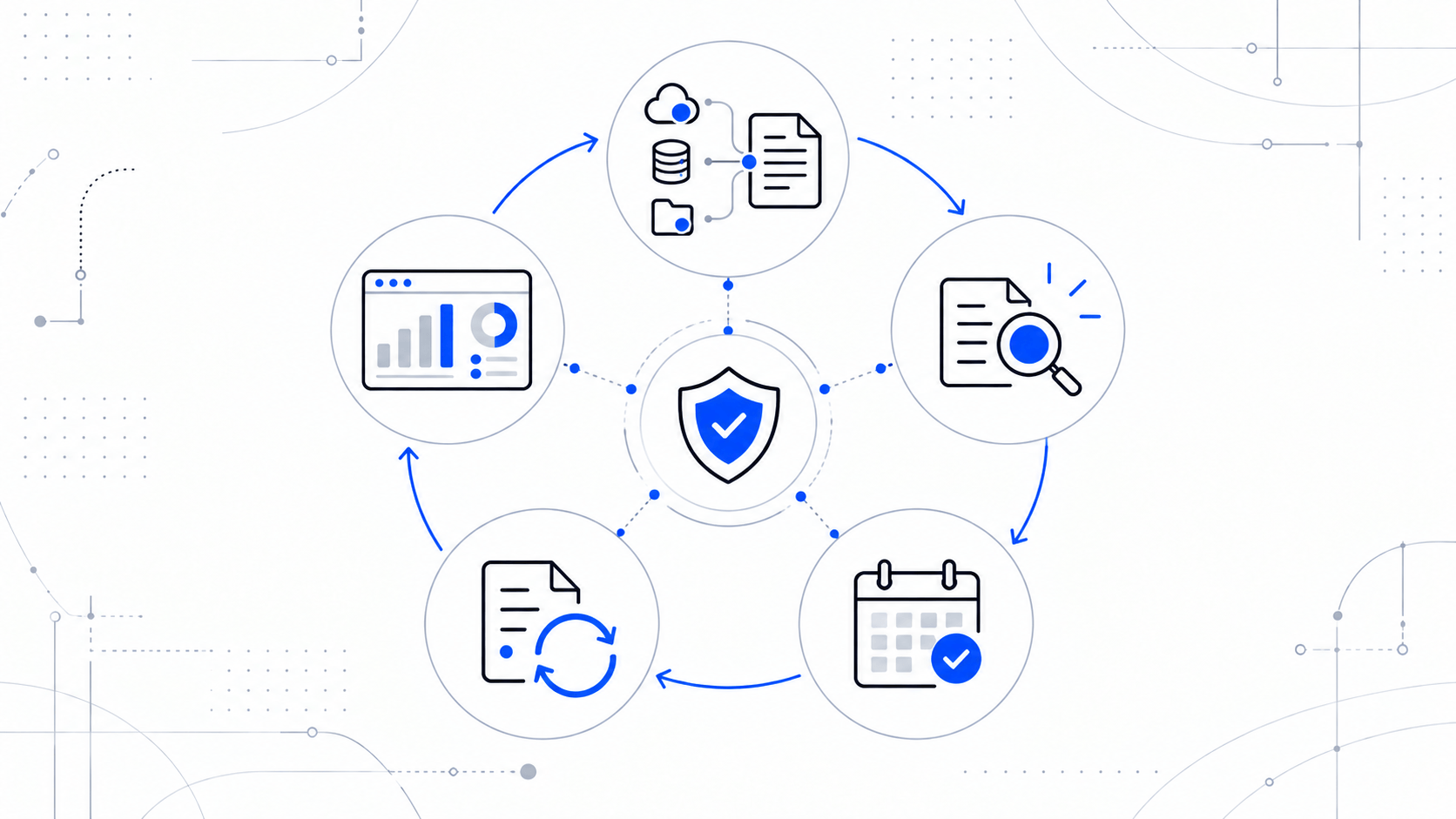
Continuous reporting can also be automated. The status of control implementation, open risks, missing evidence, overdue tasks or unresolved audit findings should not be compiled manually just before an audit. If the information is managed in one system, it can be used to continuously generate up-to-date overviews for the organisation's management, the CISO, the audit function or process owners.
The organisation thus moves from one-off audit preparation to continuous audit readiness.
AuditMaster.ai supports the entire evidence lifecycle.
It helps collect and structure information, links requirements to controls, risks and evidence, supports expert assessment through clear relationships, and provides mechanisms for the periodic review and updating of information. Our cybersecurity team sets it up for clients as a GRC platform implementation. For IMA, the platform holds the company's assets, suppliers, risks and controls; for Lagardère Travel Retail, it supports compliance management for NIS2, ZoKB and ISO 27001.
The goal is not to replace the CISO, risk manager, compliance specialist or auditor. The goal is to eliminate routine work, ensure information traceability and provide accountable individuals with better decision support.
The greatest benefit of automation is that people no longer spend their time finding, recording and managing information and can focus on assessment and risk management.
Decide what to fix first after a vulnerability scan. Prioritise findings by asset criticality, exposure and business risk, then verify remediation.
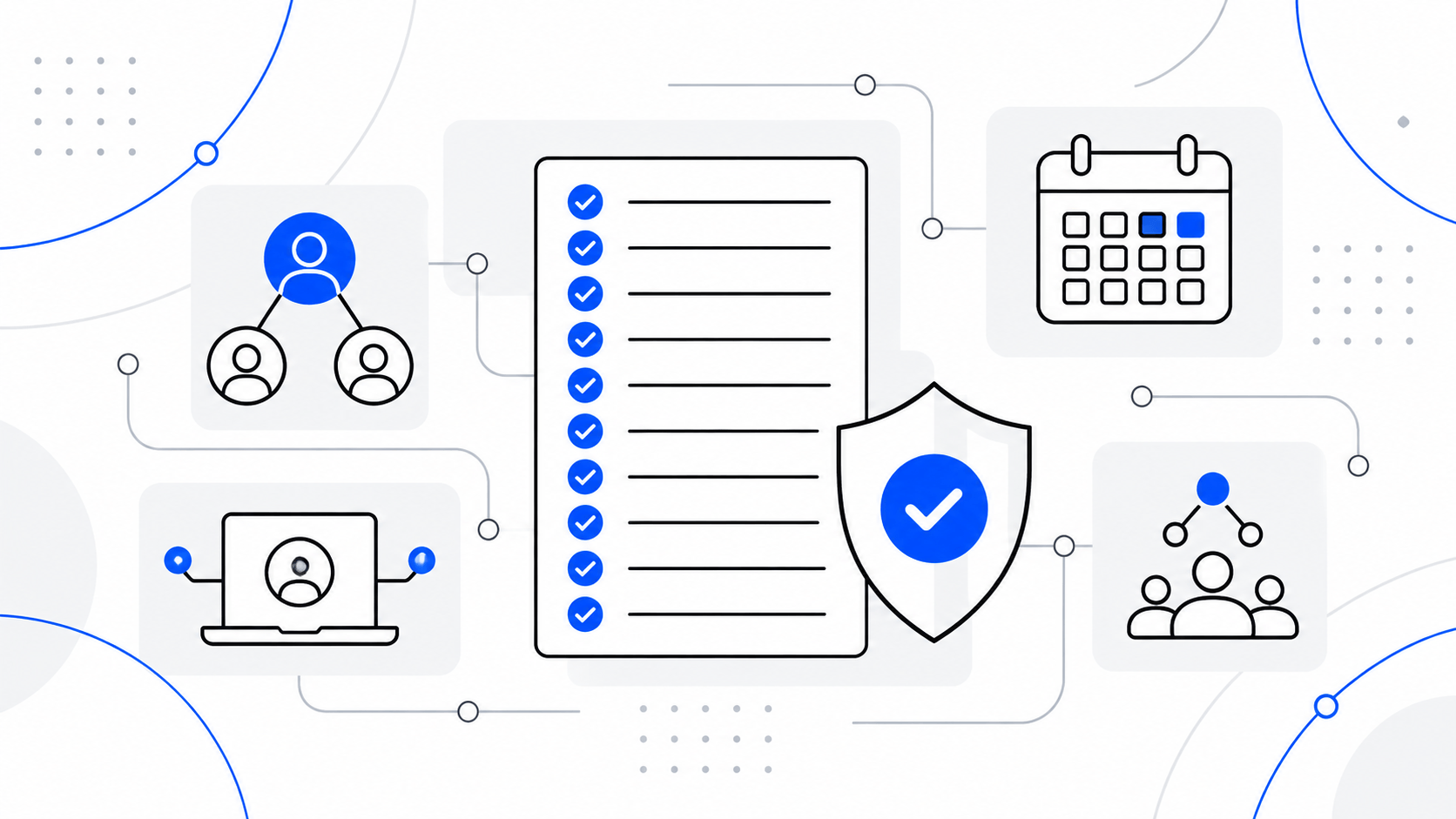
What should you prepare in the first year after registering a regulated service? A ZoKB checklist covering risks, security measures, incidents and recovery.
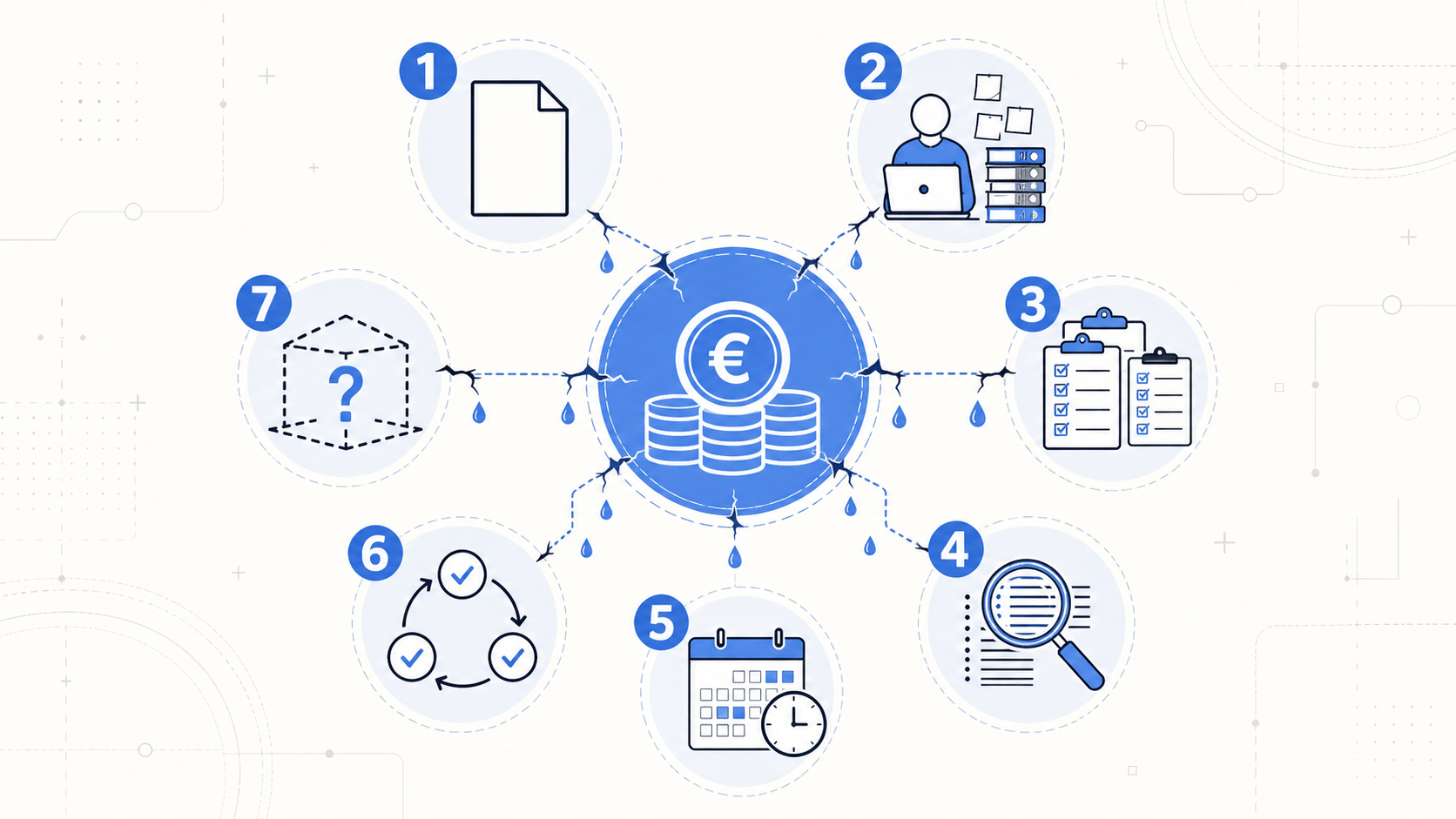
NIS2 implementation does not have to be unnecessarily expensive. See where companies pay for duplication, administration, and rework, and how to reduce costs.
Tell us what you need to secure, automate, build or staff. A senior consultant will get back to you.
 Aleš PoláčekCEO, Whirr Crew
Whirr Crew s.r.o., Rybná 716/24, 110 00 Praha 1